JCEX Package Stuck in Customs: What It Means and What to Do
A JCEX parcel that sits in customs for days can be stressful, especially when the tracking page stops moving. In most cases this is a normal step for international parcels, not a sign that your package is lost. This guide explains what the customs stage means, how long it usually lasts, and what you can sensibly do while you wait. TrackJCEX is an independent tracking tool and is not affiliated with JCEX.
In this article
- What "in customs" actually means
- How long does customs clearance take?
- Common reasons a parcel is held
- What you can do while you wait
- When to contact someone
- Will I have to pay duties or taxes?
- Is my parcel lost if it stays in customs?
- Quick summary
- The usual stages of customs handling
- Documents customs may ask for
- A short checklist before you contact anyone
- Frequently asked questions
What “in customs” actually means
When a parcel crosses a border, the customs authority of the destination country may check the declared contents, value and paperwork before it is released. During this time the parcel is held by customs, not by the courier, so scan events can pause or look vague. You may see wording such as customs clearance, arrived at customs, import processing or held by customs. Our JCEX tracking status glossary explains the common labels.
How long does customs clearance take?
There is no single answer, because it depends on the destination country, the volume of parcels at that time, and whether your parcel needs extra checks. Many parcels clear within a day or two, while others can take a week or longer during busy periods or public holidays. If you want a general idea of the whole journey, see our guide to JCEX delivery time.
Common reasons a parcel is held
- Missing or unclear item description on the shipping label or customs form
- A declared value that looks unusually low or does not match the contents
- Import duties or taxes that must be paid before release
- Restricted or regulated items that need extra documents
- A random inspection, which happens to ordinary parcels too
What you can do while you wait
- Check the tracking number again once or twice a day instead of every few minutes. Results are cached for a short time, so constant refreshing does not help.
- Make sure your name, address and phone number on the order are correct and complete, because customs or the local courier may need to contact you.
- Ask the seller for the commercial invoice or item description they declared, in case customs asks you for it.
- Look at your email and SMS inbox, including spam, for messages from the customs authority or local postal service about duties or documents.
When to contact someone
If the status has not changed for more than about two weeks, contact the seller first, because they are the shipper and can open an enquiry. For Amazon orders, use Amazon customer support. You can also reach the carrier through its official channels, as described in our guide on how to contact JCEX. We cannot see your order or speed up customs ourselves.
Will I have to pay duties or taxes?
Possibly. Many countries charge import VAT or duty on parcels above certain values, and the rules differ widely and change over time. Your national customs or tax authority is the reliable source for current rules. Some sellers include duties in the price, and others expect the buyer to pay on delivery, so check your order terms.
Is my parcel lost if it stays in customs?
A long pause alone does not mean the parcel is lost. A parcel is more likely to be a problem if tracking has not moved for a very long time and the seller or carrier cannot give any explanation. In that case ask the seller to open a trace or claim, and keep your tracking number, order number and screenshots of the tracking history. For more on stalled results, read why JCEX tracking is not updating.
Quick summary
Customs holds are common for cross-border parcels and usually resolve on their own. Keep your details correct, watch for messages about duties, give it some time, and escalate through the seller if there is still no movement after about two weeks. You can check your latest status any time on our Track Shipment page.
The usual stages of customs handling
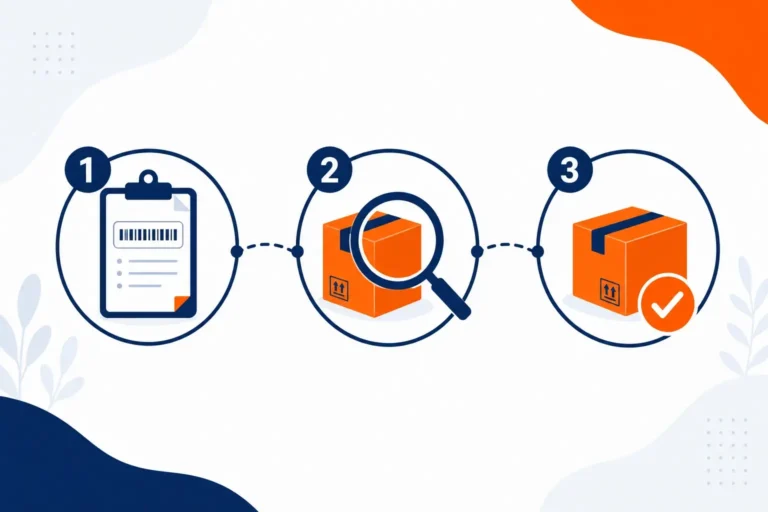
International parcels normally pass through a few steps after they arrive in the destination country. Not every step creates a visible tracking event, so the page can look quiet even while the parcel is moving along.
- Arrival and registration: the parcel is logged when it reaches the destination country or sorting centre.
- Selection: customs decides whether it can be released straight away or needs a closer look.
- Checks or payment: documents, value or contents are reviewed, and any tax or duty is calculated.
- Release: the parcel is handed to the local postal service or courier for the final delivery.
It is quite normal to see an arrival scan, then nothing for a few days, then a release scan. The quiet period is often the checking stage itself.
Documents customs may ask for
Most parcels never need extra paperwork from the buyer, but sometimes the authority or the local courier asks for proof. Having these ready can shorten the wait.
- Proof of purchase such as the order confirmation or invoice
- A clear description and value of the goods you ordered
- A copy of an identity document, in countries that require one for imports
- A tax or importer number, if you are buying for a business
Only send documents to the official postal service, courier or customs website, or through the seller. Never reply to a random message that asks for your ID or bank details.
A short checklist before you contact anyone
- Confirm the last tracking event and its date on our Track Shipment page
- Check your email, SMS and spam folder for notices about duties or documents
- Make sure your address and phone number on the order are correct
- Wait the normal time for your route, which our delivery time guide explains
- Then contact the seller with your order number, tracking number and a screenshot of the history
Frequently asked questions
Can I speed up customs clearance?
Not directly. Customs works through its own process. What you can do is make sure your contact details are correct, respond quickly to any request for documents or payment, and ask the seller for the item description they declared.
Does customs delay mean the courier has lost my parcel?
No. During a customs hold the parcel is with the authority, so courier scans pause. A hold on its own is not a loss.
Why did tracking show customs twice?
Some routes involve export clearance in the origin country and import clearance in the destination country, so you may see customs-related events at two different points.
Should I pay a fee I was asked for by message?
Only after you have confirmed with the seller or the official postal service that the request is genuine. Fake duty or release-fee messages are a known scam, so avoid paying through links you did not expect.