JCEX Import Duties and VAT: Will You Pay Extra on Delivery?
Parcels shipped from abroad can come with extra costs on arrival. If your JCEX parcel is international, you may be asked to pay import VAT, duty or a handling fee. This guide explains how these charges generally work, who collects them, and how to avoid paying twice or falling for fake payment requests. Rules differ by country and change often, so this is general information and not tax or legal advice. TrackJCEX is independent and not affiliated with JCEX.
In this article
- Why are there extra charges at all?
- Common types of charges
- Who collects the money?
- How to avoid paying twice
- Spotting fake payment requests
- How charges affect delivery time
- Returns and refunds
- A simple example of how charges can work
- Documents to keep for refunds or disputes
- A quick checklist before you pay anything
- Returning goods and import charges
- Frequently asked questions
Why are there extra charges at all?
Most countries charge tax on goods imported from abroad, and some also charge customs duty depending on the product type and value. Many places have rules for low value parcels, which are changed from time to time. Your national customs or tax authority publishes the current rules, so check there instead of relying on forum posts.
Common types of charges
- Import VAT or sales tax, charged on the value of the goods and sometimes shipping
- Customs duty, which depends on the product category and country of origin
- A handling or clearance fee charged by the local courier or postal service for processing the paperwork
Who collects the money?
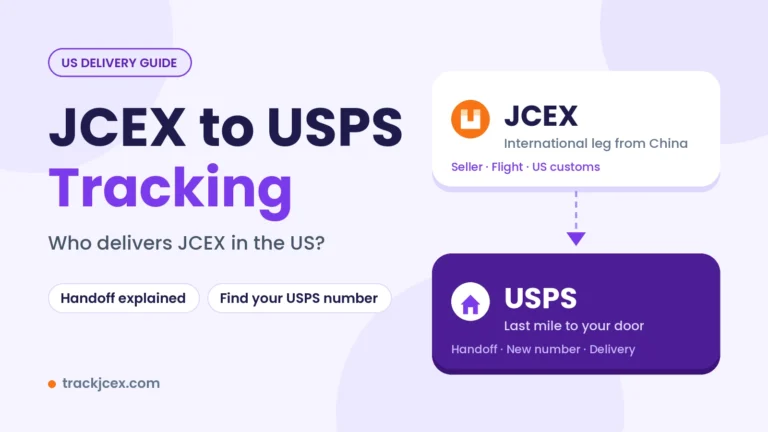
It depends on the route. Sometimes the seller or marketplace collects tax at checkout, and the parcel arrives with nothing more to pay. In other cases the local postal service or courier collects it before or at delivery. A customs hold related to this is discussed in our guide to a JCEX package stuck in customs.
How to avoid paying twice
- Read the checkout page. If it says duties are included, keep a copy
- Ask the seller whether tax was collected when you paid
- Keep the receipt and invoice to show if you are asked for payment again
- Do not pay anything until you have confirmed the request is real
Spotting fake payment requests
Scam messages often copy courier branding and ask for a small fee through a link. Warning signs include unexpected urgency, a link to an unfamiliar website, payment by gift card or crypto, and spelling mistakes. Go to the official website of the courier or postal service yourself instead of using the link, and confirm with the seller. Our guide on how to contact JCEX lists safe ways to check.
How charges affect delivery time
Parcels that need payment or documents may wait until the issue is settled, which can extend the journey. For a general timeline, read our post on JCEX delivery time.
Returns and refunds
If you return a parcel, ask the seller whether tax and duty can be reclaimed and what paperwork they need. This is handled by the seller and the customs authority, not by this website.
A simple example of how charges can work
The figures below are only an illustration to show the idea, not real rates. Your own country and product type decide what you actually pay.
- Suppose an item is declared at 40 units of currency and shipping is 10
- If your country charges 20 percent import VAT on the goods and shipping, the tax would be 10
- A courier handling fee, if any, would be added on top
- The total extra amount would then be the tax plus the fee
Check your national customs or tax website for the real thresholds, because many countries change them from time to time.
Documents to keep for refunds or disputes
If you ever need to question a charge or return an item, a clear paper trail makes it easier.
- The order confirmation and the seller invoice
- The payment receipt for the goods
- Any receipt for duty or tax you paid on delivery
- Screenshots of the tracking history and any customs messages
- Emails or chat messages with the seller about taxes or fees
A quick checklist before you pay anything
- Is the request from the official postal service, courier or customs authority?
- Does the amount match the tax rules you found on the official site?
- Did the seller already collect the tax at checkout?
- Are you paying on the official website that you opened yourself, not from a link in a message?
- Have you saved a copy of the receipt?
If any answer is no, pause and check with the seller first.
Returning goods and import charges
Returns can be confusing when tax has already been paid. The rules depend on the country and on the seller, so check before you ship the item back.
- Ask the seller whether tax or duty can be refunded after a return
- Keep the receipt for any amount you paid at delivery
- Ask whether the return needs a customs form or a special label
- Send the parcel with a tracked service and keep the proof of postage
If you buy for a business, you may be able to reclaim import VAT through your own tax account. Your accountant or the national tax authority can confirm how that works in your country, since the rules are specific to each place.
Frequently asked questions
Will every JCEX parcel have import charges?
No. It depends on your country, the value and type of goods, and how the seller handled tax at checkout.
Can I refuse to pay and send the parcel back?
You may be able to refuse delivery, but the parcel might then be returned or abandoned and you may lose your refund options. Talk to the seller first.
Where can I check the rules?
On the website of your national customs or tax authority, which is the only reliable place for the current thresholds and rates.
Does TrackJCEX collect any fees?
No. Our tracker is free, and we never ask for payment or card details.